EPFL — PhD Research · 2017 – 2021
Impact of VR and Viewpoints in Drone Teleoperation
IEEE VR 2021 · 18 citations
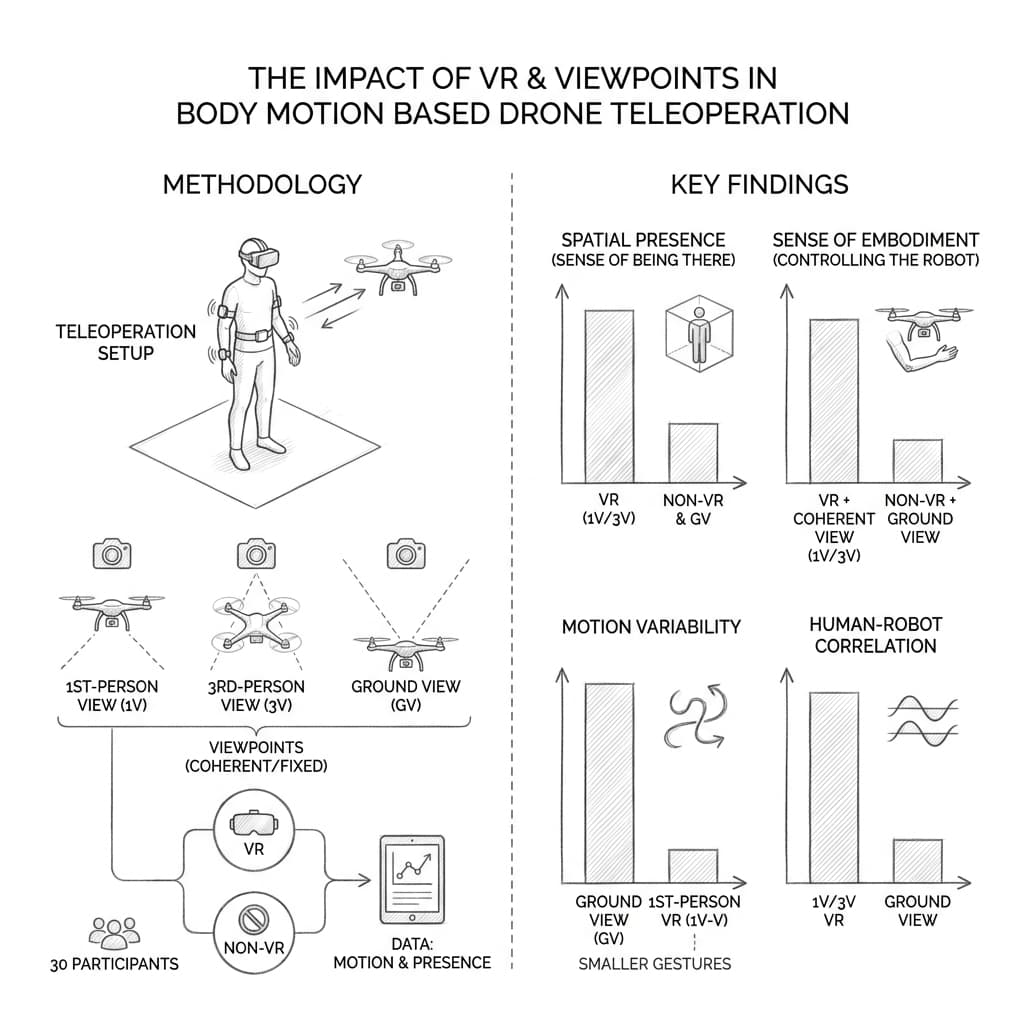
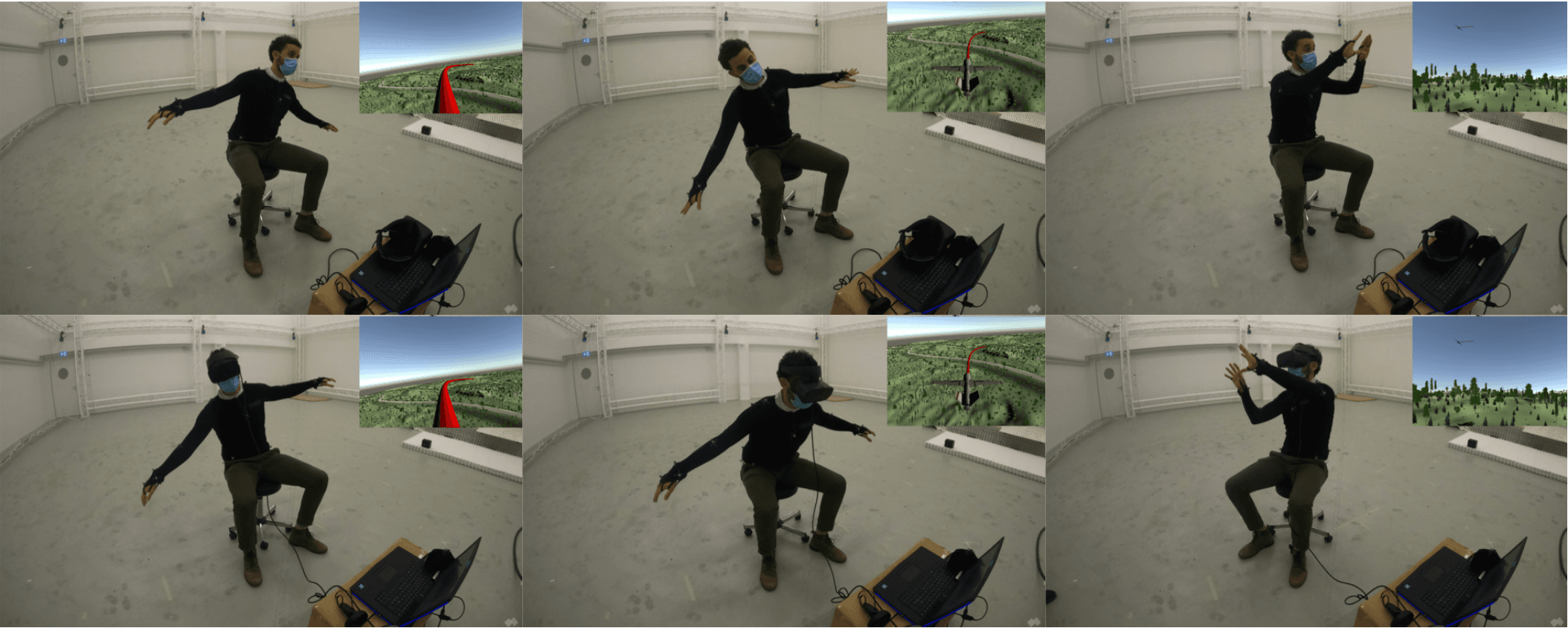
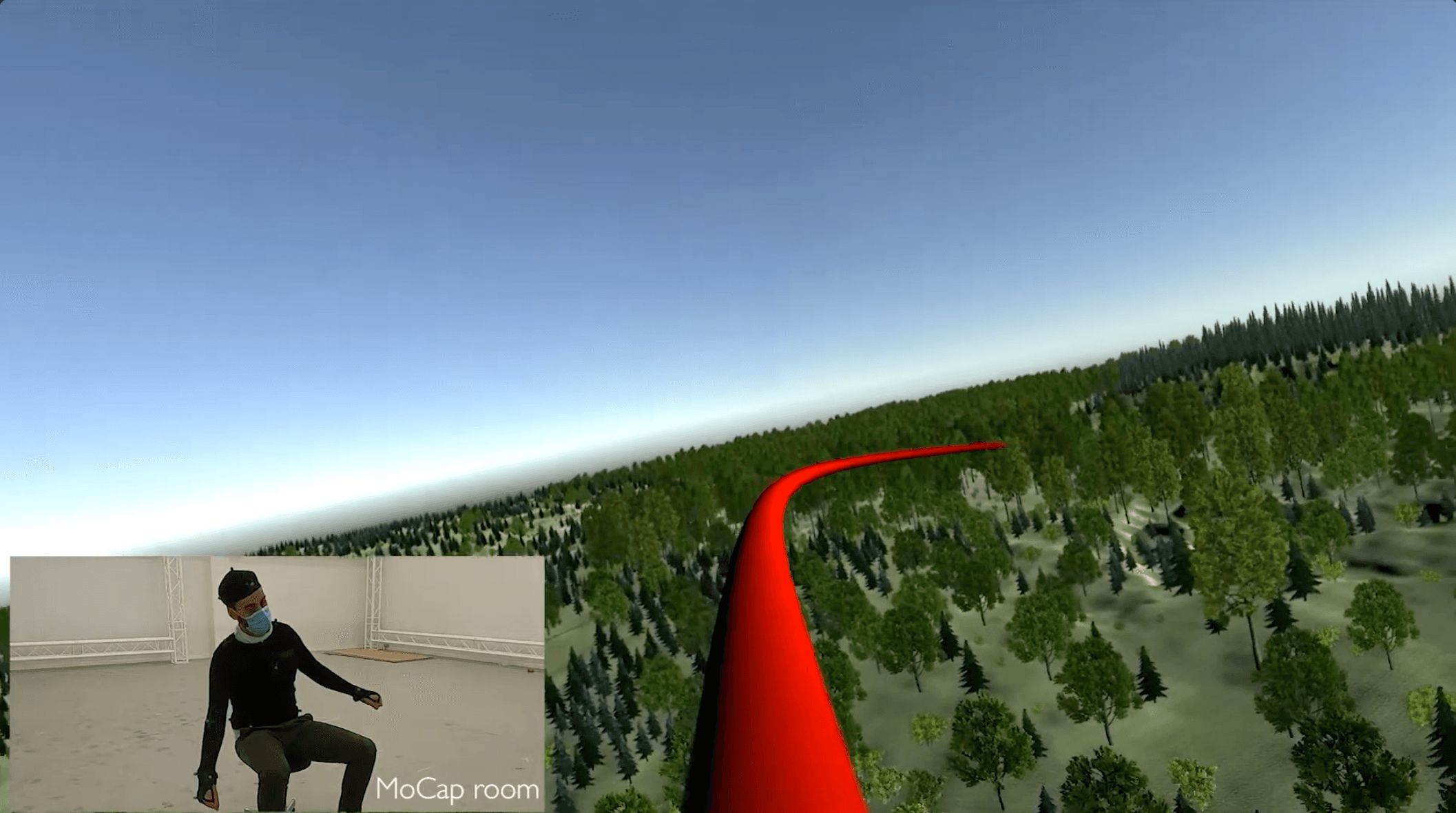
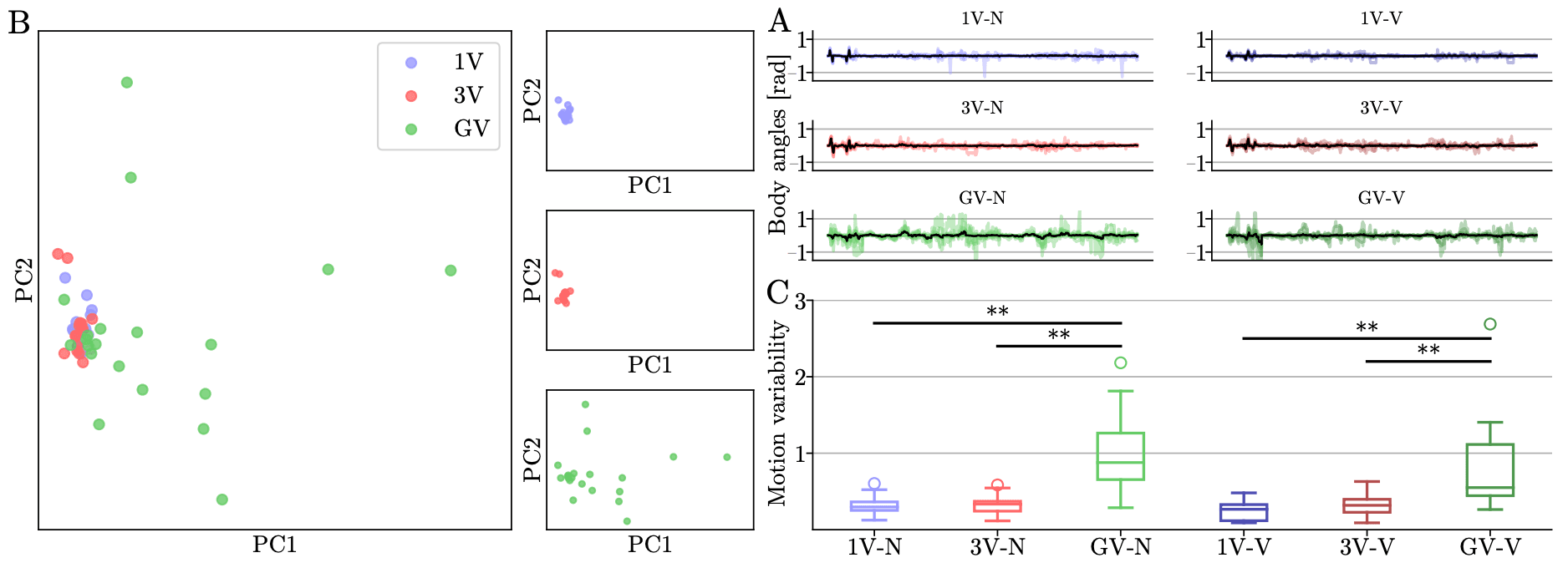
When you pilot a drone with your body, where you "see from" matters enormously. Does wearing a VR headset — immersing yourself in the drone's first-person perspective — actually improve control compared to a standard monitor? And does it matter whether the camera matches the body segment you're using to fly? These questions had no empirical answer for body-motion interfaces.
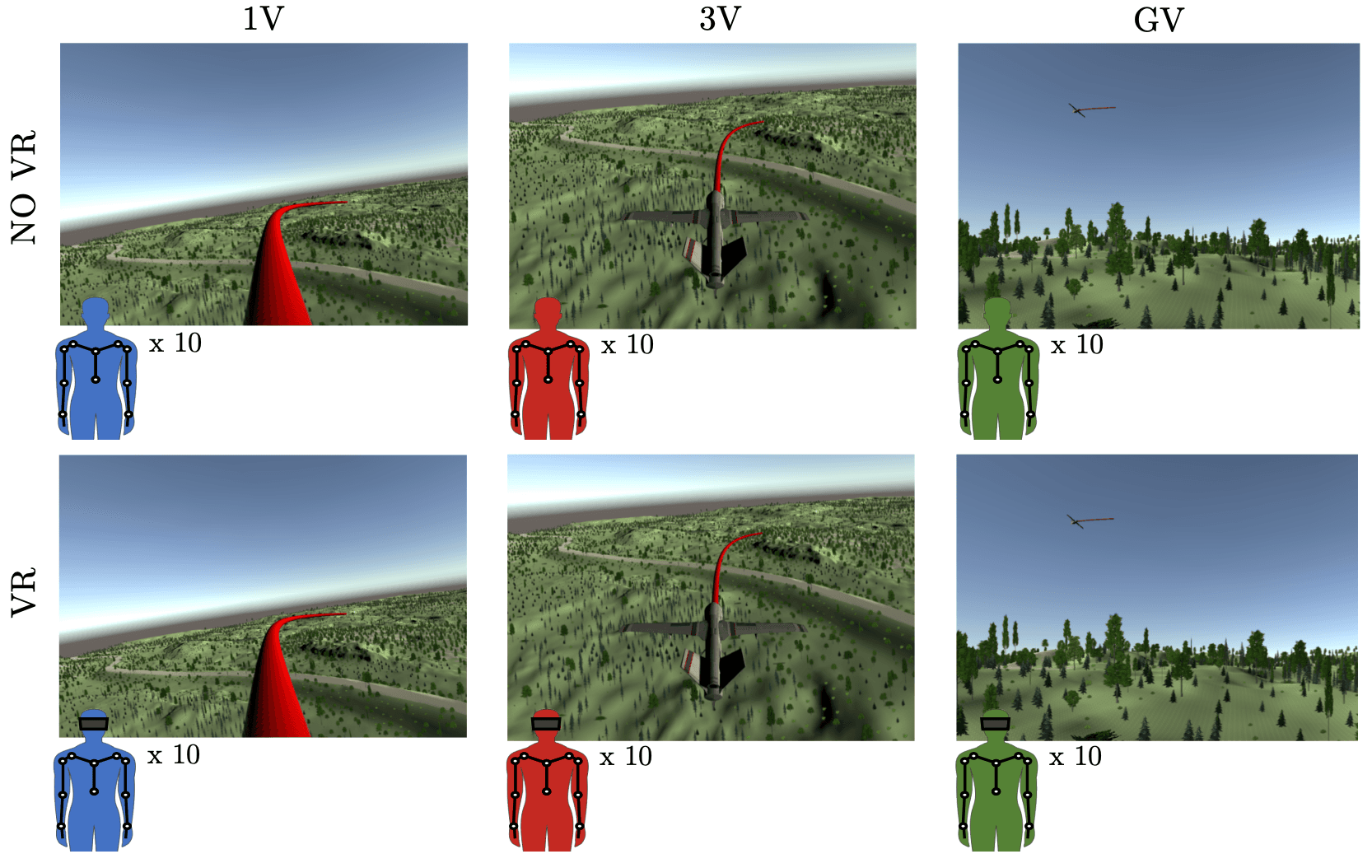
This study ran a controlled experiment with participants piloting a drone using torso motion, across four conditions combining two display types (VR headset vs. flat screen) and two camera viewpoints (egocentric vs. third-person). We measured task performance, spatial presence, and sense of embodiment throughout.
VR headsets significantly increased spatial presence and sense of embodiment — participants felt more "inside" the drone — but didn't always translate directly into better flight performance, particularly for novices. Coherent viewpoint alignment (camera matching the controlling body segment) had a clearer positive effect on embodiment. The findings inform the design of future immersive teleoperation interfaces and were presented at IEEE VR 2021, cited over 15 times.